
Get Remote Travel Nursing in Canada Today

The reward for remote travel nursing in Canada is impressive, interestingly, many nurses avoid it.
The reason is easy to see; remote assignments come with lots of sacrifice and sometimes, inconvenience.
Notwithstanding, healthcare facilities across Canada are actively hiring travel nurses like you who are willing to go the length for remote and underserved locations.
If you position yourself correctly, you can secure a contract, lock in accommodation, and start earning within weeks consequently.
This guide breaks down exactly how to do it.
Stay with me.
What “Remote Travel Nursing” Means in Canada
In Canada, “remote” doesn’t mean working from home. It means on-site roles in high-need areas where staffing is limited.
You’ll typically work in:
- Northern communities
- Rural hospitals
- Indigenous health centers
- Nursing stations and community clinics
These locations are harder to staff. As a result, employers offer higher pay, faster hiring, and additional benefits to attract qualified nurses.
Why You Can Get Hired Faster in Remote Locations
Healthcare systems in provinces like Ontario, Manitoba, and Saskatchewan constantly deal with staffing gaps.
That creates an advantage for you:
- Open roles need immediate coverage
- Less competition compared to city jobs
- Faster interview and approval process
- Flexible start dates
If your profile is ready, you can move from application to confirmed placement in 2–4 weeks.
Requirements to Get Remote Travel Nursing Jobs in Canada

Before applying, make sure you meet the following requirements. Missing any of these slows your placement.
Licensing and Registration
You must have license or be eligible through a provincial body such as:
If you’re applying to another province, your agency can guide you through licensing transfer or registration.
Work Authorization
You need one of the following:
- Canadian citizenship
- Permanent residency
- Valid work permit
Clinical Experience
Most roles require:
- 1–2 years recent nursing experience
- Confidence working independently
- Ability to adapt to smaller teams
Certifications (Role-Based)
Depending on the assignment:
Step-by-Step Guide on How to Get Remote Travel Nursing Jobs in Canada
This is where most people get stuck. Follow this process and you’ll move faster than 90% of applicants.
Step 1: Build a Placement-Ready Profile
Your application must be complete before you apply.
You’ll need:
- Updated CV (clear roles, dates, responsibilities)
- Active nursing license
- Certifications
- 2–3 references
If your profile is incomplete, agencies won’t prioritize you.
Step 2: Register With a Healthcare Staffing Agency
This is the fastest and most effective route.
Reliable agencies like Goodwill Healthcare Staffing will:
- Match you with active contracts
- Handle job submissions
- Assist with licensing
- Arrange housing and travel
- Manage payroll and support
Trying to apply alone slows you down significantly.
Step 3: Get Matched to Open Contracts
Once registered, you’ll receive job offers based on:
- Your specialization (ER, med-surg, community)
- Availability
- Location flexibility
You’ll review:
- Pay rate
- Contract duration
- Location details
- Benefits included
Step 4: Accept Your Offer and Confirm Placement
Once you accept:
- You get your contract
- Your travel logistics is ready
- You get your apartment
At this point, your start date is locked in.
Step 5: Travel and Start Your Assignment
You arrive at your assigned location, complete onboarding, and begin work.
If everything is prepared, this entire process can take as little as 2–4 weeks.
Where Do You Want Placement?
If your goal is fast placement, these areas offer the most opportunities:
High-demand locations:
- Northern Ontario
- Rural Manitoba
- Remote Saskatchewan
- Northern Alberta
- Territories like Nunavut
These regions consistently need nurses, which means faster hiring and better packages.
Roles You Can Apply For
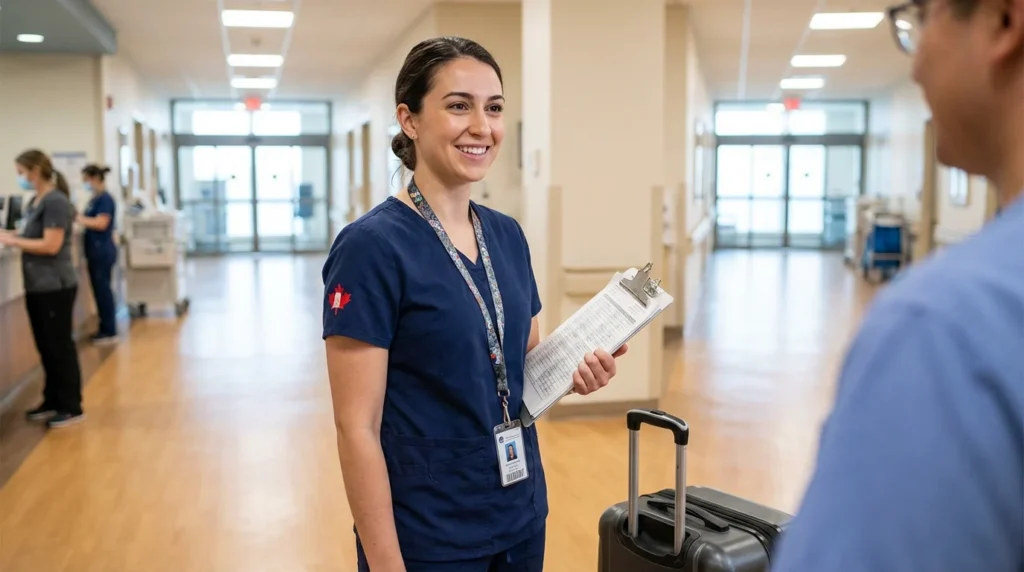
Your options depend on your experience and certifications.
Common roles:
- Registered Nurse (RN)
- Licensed Practical Nurse (LPN)
- Emergency Room Nurse
- Community Health Nurse
- Medical-Surgical Nurse
Pay, Benefits, and What You Actually Get
Remote travel nursing roles are designed to attract talent fast.
Most contracts include:
- Competitive hourly pay
- Housing or housing allowance
- Travel reimbursement
- Per diems (in some roles)
- Overtime opportunities
Remote roles often pay more because of urgency and location difficulty.
Want Quick Placement? Here’s What Works
If you want to move quickly, focus on execution.
Do this:
- Keep your documents updated and ready
- Respond immediately to job offers
- Stay flexible with location
- Maintain active certifications
Avoid this:
- Incomplete applications
- Delayed responses
- Being too selective early on
- Expired credentials
Speed matters in travel nursing. The faster you respond, the faster you get placed.
What to Expect on Assignment
Remote placements are different from city hospitals.
You may face:
- Smaller teams
- Broader responsibilities
- Limited resources
- High patient demand
But you gain:
- Strong clinical independence
- Faster skill development
- Valuable real-world experience
- Higher earning potential
Who This Is Best For
Remote travel nursing in Canada is ideal if you:
- Want quick access to job opportunities
- Are open to relocation
- Can work independently
- Want to increase your income
If you prefer routine and one location, this may not be the right fit.
To Wrap It Up
Becoming a travel nurse or getting remote travel nursing in Canada requires you to work with a trusted healthcare staffing agency. with a system that works.
You prepare your documents, register with the right agency, accept a contract, and start working.
The demand is already there. The speed at which you get hired depends on how ready you are.
While responsibilities as a remote travel nurse may be hectic, it is truly rewarding.
Let us help you get started now.
FAQs
1. How do I get remote travel nursing jobs in Canada fast?
You get placed faster by preparing your documents (CV, license, certifications), then registering with a healthcare staffing agency. Once your profile is complete, agencies can match you with active contracts and get you working within 2–4 weeks.
2. Do I need a Canadian nursing license before applying?
You either need an active provincial license or be eligible to register. Most agencies will guide you through the licensing process if you’re applying to a new province.
3. Can foreign nurses apply for remote travel nursing jobs in Canada?
Yes, but you must have a valid work permit or meet immigration requirements. Without legal authorization to work in Canada, you won’t be placed.
4. How long does it take to get placed?
If everything is ready, placement can take 2 to 4 weeks. Delays usually happen due to incomplete documents or licensing issues.
5. What qualifications do I need?
Most roles require:
- 1–2 years recent nursing experience
- Active or eligible license
- Basic certifications like BLS (and sometimes ACLS)
You also need to be comfortable working independently.
6. What kind of jobs are available?
You can apply for roles like:
- Registered Nurse (RN)
- Licensed Practical Nurse (LPN)
- Emergency Room Nurse
- Community Health Nurse
Your options depend on your experience and certifications.
7. Do remote travel nursing jobs include accommodation?
Yes, most contracts include housing or a housing allowance. Travel costs are also often covered or reimbursed.
8. How much do remote travel nurses earn in Canada?
Pay varies by location and urgency, but remote roles usually offer higher rates than city jobs due to demand and location challenges.
9. Do I have to work in very isolated areas?
Yes, most remote roles are in rural or northern communities. However, you can often choose assignments based on your comfort level and flexibility.
10. What is the fastest way to get started today?
Start by:
- Updating your CV
- Gathering your credentials
- Registering with a staffing agency
- Applying to active roles immediately
The faster you act, the faster you get placed.